
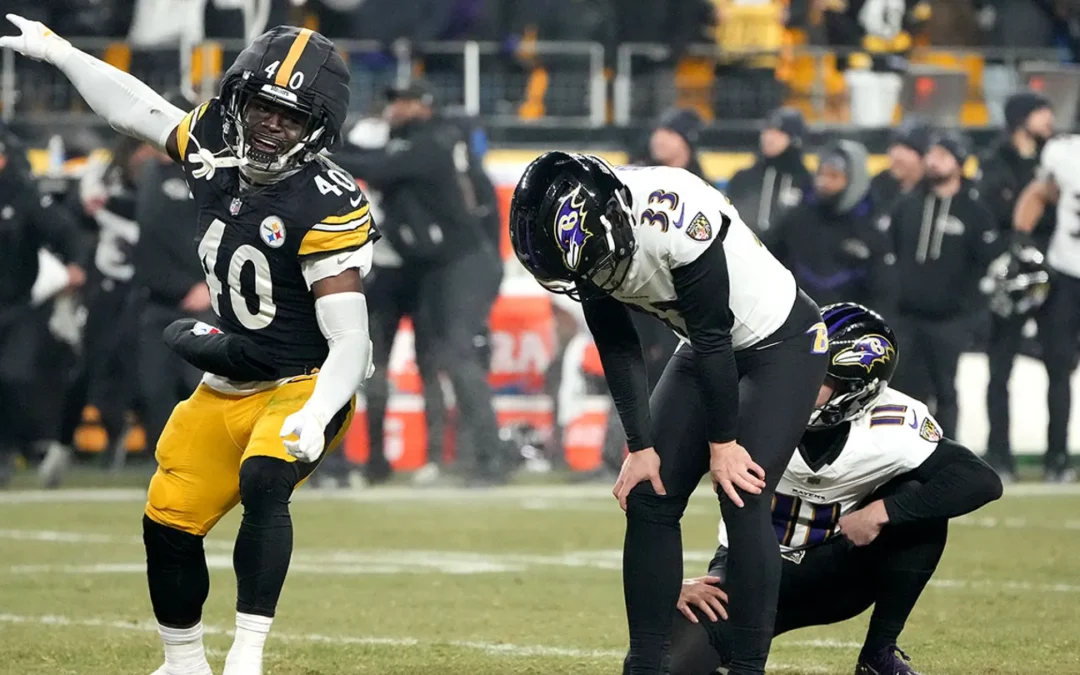
This past weekend, NFL fans witnessed a classic Week 18 showdown between the Ravens and the Steelers. The stakes couldn’t have been higher: the winner would claim the AFC North crown and a home playoff game; the loser would see their season come to an abrupt end.
The game came down to a single, heart-stopping moment: a 44-yard field goal attempt by Ravens rookie kicker, Tyler Loop.
For Tyler, this was the moment he had trained for his entire life. It was an opportunity to be “the clutch,” to directly decide the fate of his team’s season. As we now know, the kick sailed wide right. The Ravens’ season ended right there on his foot.
While most of us aren’t kicking in front of 70,000 screaming fans, every competitive junior golfer can relate to that “all-or-nothing” feeling. It’s your high school state championship, you’re in the final pairing, and you’re tied with nine holes to play.
Pressure is a Privilege
It is easy to look at Tyler Loop’s miss and feel only the sting of defeat. But there is a much more powerful perspective to consider: Having that moment at all is a privilege.
In the words of tennis legend Billie Jean King, “Pressure is a privilege.” It means you’ve done the work. It means you’ve put yourself in a position where the outcome actually matters. Golfers spend countless hours practicing for the chance to be in the final group, to feel the heat of competition, and to see what they’re made of when the lights are brightest.
When you find yourself in those high-pressure situations—whether you’re closing out a tournament with three straight pars or facing an untimely errant drive—remember that being “the person in the arena” is a vital part of your development.
The First Time is Always the Hardest
The first time you experience true competitive pressure, it feels… weird. It’s a cocktail of adrenaline, anxiety, and excitement. You are physically and mentally in a place you’ve never been before.
If we “dumb it down,” it’s simply a learning experience. You cannot simulate the “back nine on Sunday” feeling during a casual round with friends. You have to live it.
- The miss teaches you about your process.
- The make teaches you about your potential.
- Both teach you about your resilience.
Tyler Loop is currently facing a tough “offseason” of reflection. He failed at the task he was hired to do. But how he responds—and who he has around him to coach him through it—will define the trajectory of his career.
A Note to the Support Team
For the parents and coaches reading this: your role in these moments is everything. When a player “misses the kick,” they don’t need a technical breakdown of what went wrong right away. They need a support system that validates the effort it took to get there.
Help them see that the failure isn’t a dead end; it’s a data point. The goal isn’t just to make the next “kick”—it’s to be just as eager for the opportunity to take it, knowing that win or lose, they are becoming a stronger, more capable athlete.
(AP Photo/Gene J. Puskar)