
The one fall event that ends in match play, not a scorecard — and the format junior schedules almost never include.
Every college result this fall has been settled the same way: add up three rounds, lowest number wins. The Jackson T. Stephens Cup ends differently — with match play, one team against another, decided on the course instead of on an adding machine. For a junior golfer who has only ever played stroke play, that difference is worth studying, because it’s the format college golf keeps and junior schedules mostly skip.
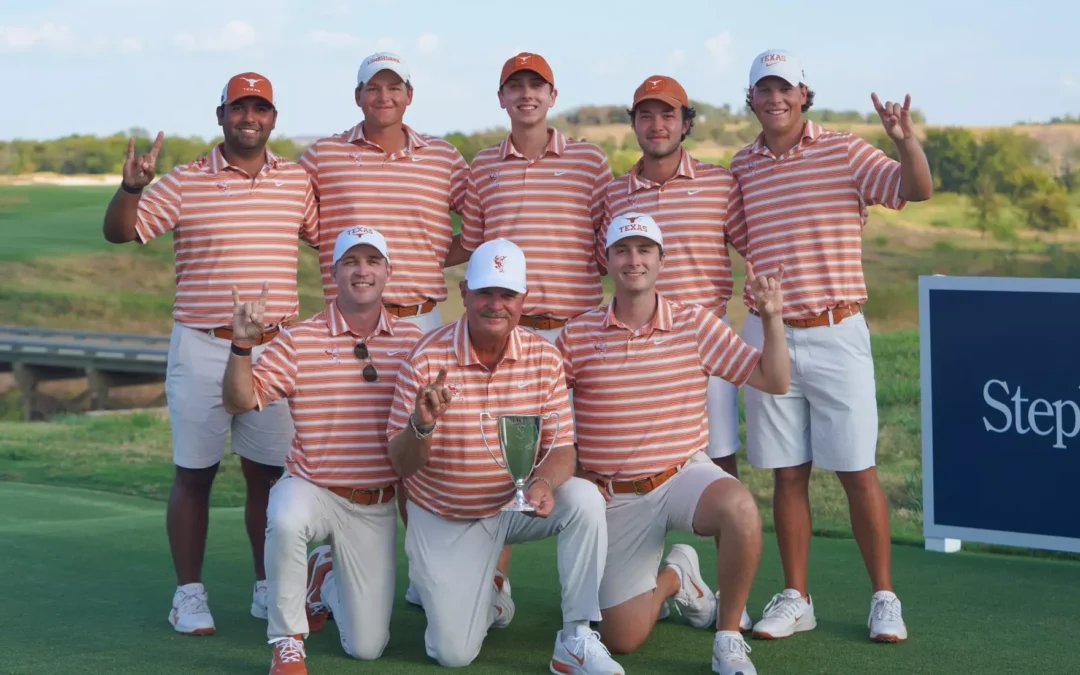
Per The Golf Wire, the Stephens Cup at Fields Ranch East at PGA Frisco runs 54 holes of stroke play to crown individual champions, then 18-hole match play to decide the team titles — men’s and women’s fields together at one event. In the match-play final, Texas took the men’s team crown over Texas A&M, who earned the runner-up finish. In the stroke-play rounds, Texas’s Daniel Bennett and Matt Comegys tied at 9-under 207 and were named co-champions; on the women’s side, Texas’s Farah O’Keefe and Wake Forest’s Macy Pate tied at 4-under 212, with Pate becoming the first repeat women’s winner in the event’s six years.
Here’s the Hub’s read on it, and this is our opinion, not a line from the results. Junior golf is almost entirely stroke play — every shot counts, you add them up, and the field you’re chasing is really just a number on a board. Match play is a different sport wearing the same clothes. You’re not playing the field; you’re playing one person, and every hole starts even again. A quadruple bogey costs you exactly one hole — no more than a bogey does. That math rewards a different temperament: aggression when you’re down, nerve when you’re up, and a short memory for the hole you just lost.
For a junior reading this, or a parent building a fall schedule, the takeaway is simple: if your player has never played real match play, they’re missing a gear that college golf will expect. You don’t have to wait for a bracketed event to practice it. Play a friend head-to-head, halve-or-win every hole, press when you fall behind. Learn to lose a hole and walk to the next tee like it never happened. It is the most fun format in the game and the one juniors practice least — and weeks like this are the reminder why it matters.
Curious which college programs play events like this, and how their rosters are built? Start mapping your player’s path in the Hub’s Roadmap