The Early Exit: Why Junior Golf’s Best Are Weighing the Pro Path Sooner
By Rick Dowling ·
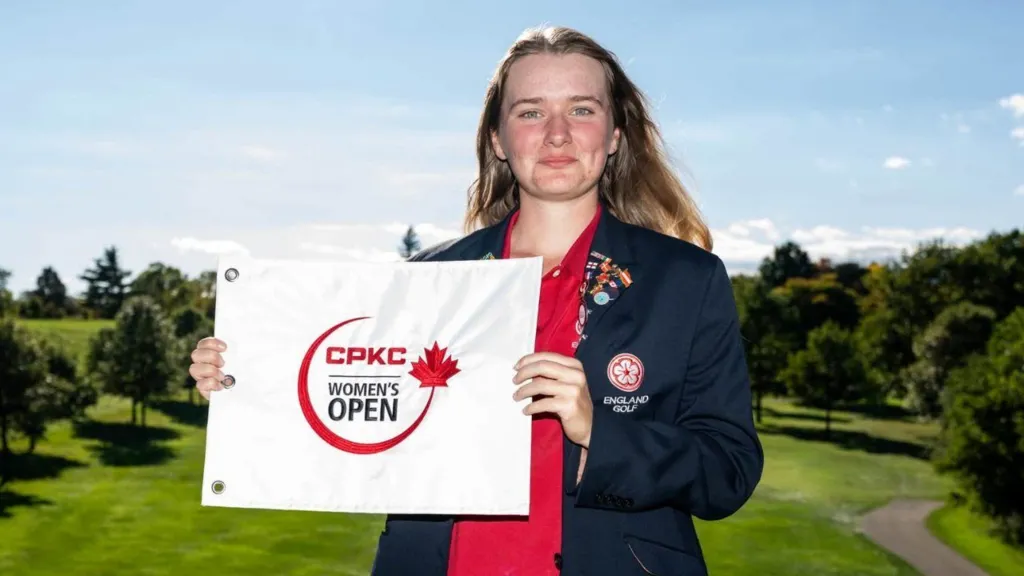
A world title, and a decision
Lauren Crump didn’t pick up a golf club seriously until after the pandemic. Last month, the 17-year-old from Whitchurch, Shropshire, won the World Junior Girls Golf Championship in Canada, closing with a 1-under 70 to finish at 11-under.
The win earns her a spot at the 2027 CPKC Women’s Open in Gatineau next August. That will be her second LPGA start. She came through final qualifying for this summer’s AIG Women’s Open and missed the cut by a single shot.
Add a Junior Solheim Cup win with Team Europe and an individual title on the Rose Ladies Series, and 2026 has been a breakout year. Now she’s made the call many families are watching for. Speaking to the BBC, Crump said, “I’m not going to college any more,” and that she plans to start weighing the pro move in 2027.
She’s not the only one
Crump’s decision lands in the same month that the top American junior girl kept her options open. Asterisk Talley, the 17-year-old defending U.S. Women’s Amateur champion, is verbally committed to Stanford but chose not to sign during the early signing period. She holds 15 of the 20 points she needs on the LPGA’s Elite Amateur Pathway and has exemptions into four majors next year, including the Chevron. How she plays there will shape when she turns pro.
They’re following a road others have already paved:
| Player | Age at decision | What they had in hand | Where it led |
|---|---|---|---|
| Blades Brown | 17 (Dec. 2024) | Sponsor exemptions; a made cut on the PGA Tour at 16 | Won the World Wide Technology Championship on Nov. 8, 2026, the PGA Tour’s youngest winner since 1931 |
| Gianna Clemente | 17 (2025) | An LPGA age waiver and a Q-School path | Epson Tour status for 2026 |
| Asterisk Talley | 17 (Nov. 2026) | 15 of 20 Elite Amateur Pathway points; four major exemptions | Undecided; still verbally committed to Stanford |
| Lauren Crump | 17 (Nov. 2026) | A 2027 LPGA start via her world junior title | Plans to weigh turning pro in 2027 |
Why the best are moving sooner
Today’s elite juniors arrive more complete. Year-round coaching, launch-monitor data, fitness and nutrition programs, and full national schedules mean a top 17-year-old has more competitive reps than many college sophomores did a generation ago. Crump, Talley and Brown had all teed it up against professionals before they made their call. They weren’t guessing whether they belonged.
But readiness alone isn’t the trigger. Look at the table again. Every one of these players had access in hand: an exemption, a pathway, a waiver, a tour start already booked. Golf has built formal shortcuts to tour status, and when a junior can earn a card by playing well, college starts to look like a detour.
The early movers’ success feeds the trend too. Brown’s win this month is the proof point every family considering the jump will hear about.
The fine print
Even the readiest players have a hard first year. Brown finished 68th on the Korn Ferry Tour points list in his first full season. Only the top 75 kept full status. He was seven spots from losing it before he became a PGA Tour winner.
We only hear about the ones who make it. Early movers who stall don’t get BBC stories, so the trend looks safer than it is.
College is a pro on-ramp, not a waiting room. Brown’s playoff opponent, Ben James, played four seasons at Virginia and earned his card by finishing first in the 2026 PGA Tour University ranking. Two different routes reached the same playoff. College golf now comes with real NIL value too.
Talley sees both sides. She has said the benefits of turning pro sooner are clear to her, but she still wants to weigh what a college team offers.
What it means for your family’s roadmap
This is a trend at the very top of the game, not a new default. For the handful of juniors with tour access already in hand, turning pro early is a reasonable, calculated decision. For everyone else, being “ready” means ready for college golf, and college remains the most reliable path to the professional ranks.
Better training pathways raise the bar for every player. That makes college rosters more competitive, not less important. The families who do best ask the right question early: not “how soon can we go pro?” but “what’s the right next step for this player?”
Start mapping yours. Explore programs, rosters and scoring benchmarks in the Hub college database, and keep your JGH profile current so coaches can follow your journey.
Photo: EnglandGolf