
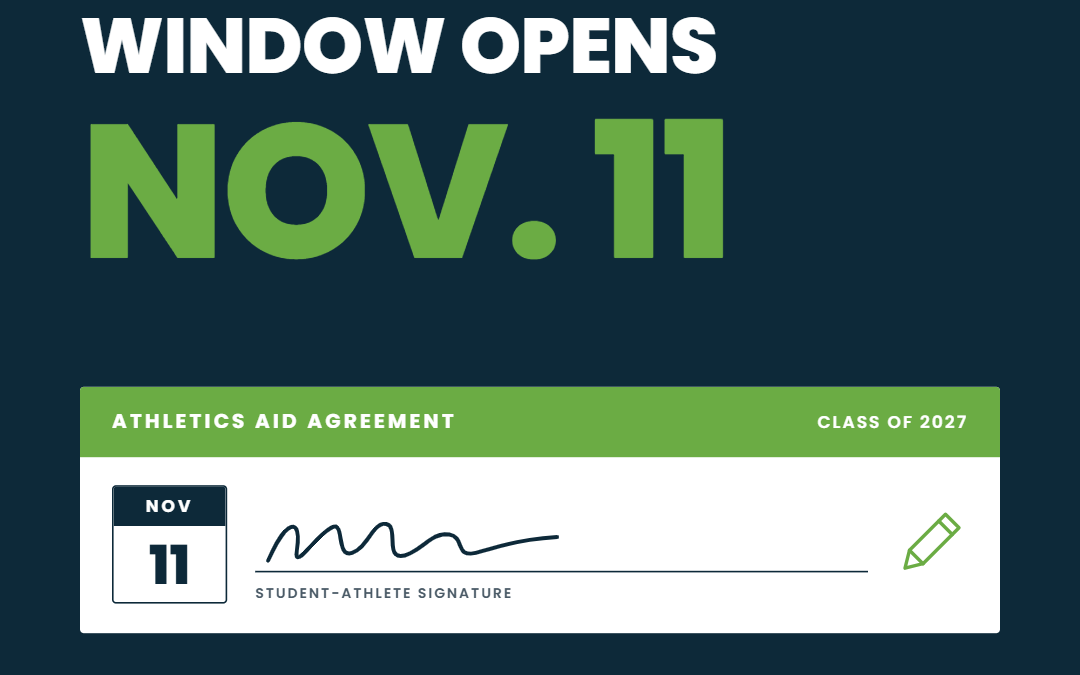
If your senior has a verbal commitment, Wednesday, Nov. 11 is the first day it can become official — and the document they sign won’t be the one most parents remember.
Here’s why the date still holds. When the NCAA folded the old National Letter of Intent (NLI) into its own rules, the signing dates came along with it. Per Division I, golf falls under “all other sports,” and the first signing date for those sports is the second Wednesday in November at 7 a.m. This year, that’s Nov. 11.
What’s different is the paper. As the Hub’s Signing With a College Golf Program guide lays out, the centralized NLI program ended after the 2023–24 cycle, with the final NLI period running through Aug. 1, 2024. Now each college issues its own binding athletic aid agreement directly. Some people still call it a “letter of intent,” but the school administers it, not a national office.
A few things haven’t changed. The agreement typically commits the athlete to one academic year and the school to one year of athletic aid, though terms can vary by school. It’s a commitment to the university, not to a coach, so it generally stands if the coach leaves (confirm that with the school). It’s for high school seniors only, and it’s voluntary. It mainly applies to Division I and II: Division III programs don’t offer athletic scholarships, Ivy League schools don’t offer athletic aid, and NAIA schools and junior colleges follow their own practices.
The Hub’s view (our opinion): if a program offers you an agreement, signing it is usually the right call. A verbal commitment is non-binding and can happen up to two years before enrollment — a lot can change in two years. The signed agreement turns a strong intention into a secured roster spot. Critics fairly point out that schools keep more flexibility to withdraw an offer, over admissions or other issues, than the athlete has to walk away. We still think that certainty is worth it for most families. And Nov. 11 is a starting line, not a deadline: coaches rarely lock in a full class at once.
What this means for you. Seniors with a verbal: ask your coach or the school’s compliance office now when the agreement will arrive, what its terms are, and what happens if the coaching staff changes. Each school sets its own process, so get the answer from them, not from a group chat. Seniors still looking: keep a competitive spring schedule, take visits when you can, keep coaches updated on results, grades and test scores, and ask directly where you stand — a clear “no” frees you to focus on schools where you have a real chance. Juniors in the class of 2028: your verbals stay non-binding, so keep your options and your schedule strong.
Before Nov. 11, read the Hub’s full guide to signing with a college golf program so your family walks into signing week knowing exactly what’s on the page.